
Xeres Corp/About
About Xeres Corp
Xeres Corp is a timber production and export company based in Luanda, Angola. We operate one of Angola's largest hardwood mills — milling, grading, drying and export packing. We supply sawn and profiled African hardwood to importers, joineries, boatyards and architectural projects across Europe, Asia and Africa. Xeres has been active in the timber industry since 2017 and employs more than 150 people.
01The wood
African hardwoods, milled to specification
The four we mill in the largest volume are set out below, each with its botanical name and the measured properties your specifier, your customs broker and your compliance officer will ask for.
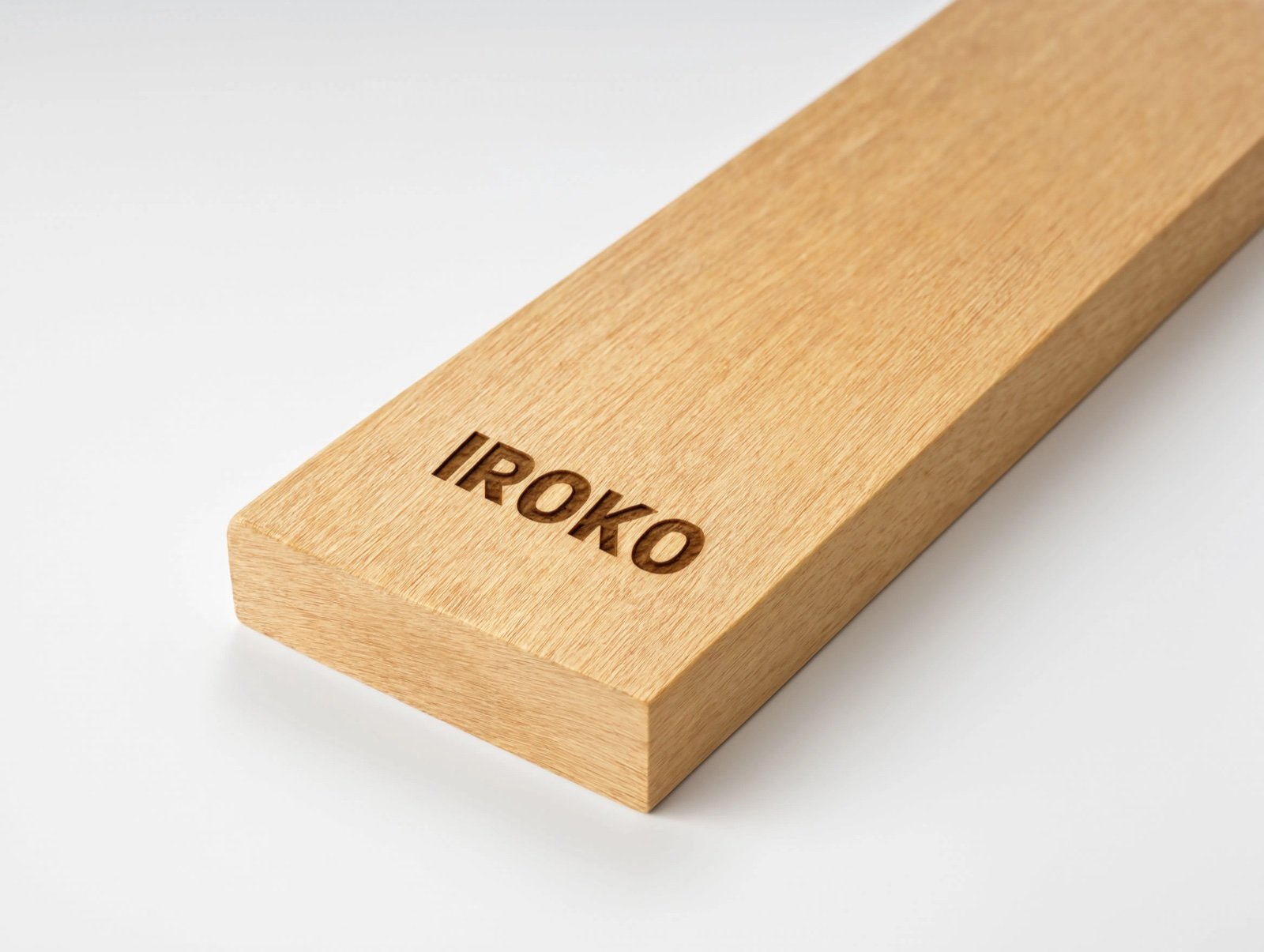
Iroko
Milicia excelsa
The workhorse of African exterior hardwood: durable enough to specify without preservative treatment, stable enough to hold its dimensions through a European winter, and free of CITES paperwork.
Iroko carries EN 350 durability class 1–2 against fungal decay and class D against termites, which puts it in Use Class 3 — exterior, above ground — untreated. Its T/R shrinkage ratio of 1.5 is unusually low for a tropical hardwood, which is why it cups and distorts less than most.
It is the standard teak substitute, and on several measures not a compromise: harder than teak (1,190–1,260 lbf against 1,070) with a better T/R ratio (1.5 against 2.0), so it cups less. It is used as a teak substitute in production sailing yachts, including by Beneteau.
Colour: freshly cut heartwood is a distinct yellow, turning golden brown within days and continuing to a medium or dark brown. Iroko darkens in indirect light but bleaches in direct sunlight — unfinished exterior cladding weathers to silver-grey, while interior joinery deepens to brown. Specify for the aged colour, not the fresh one.
UsesExterior joinery, cladding, decking, interior joinery, flooring, furniture, park benches, boat and shipbuilding, bridges, laboratory benching.
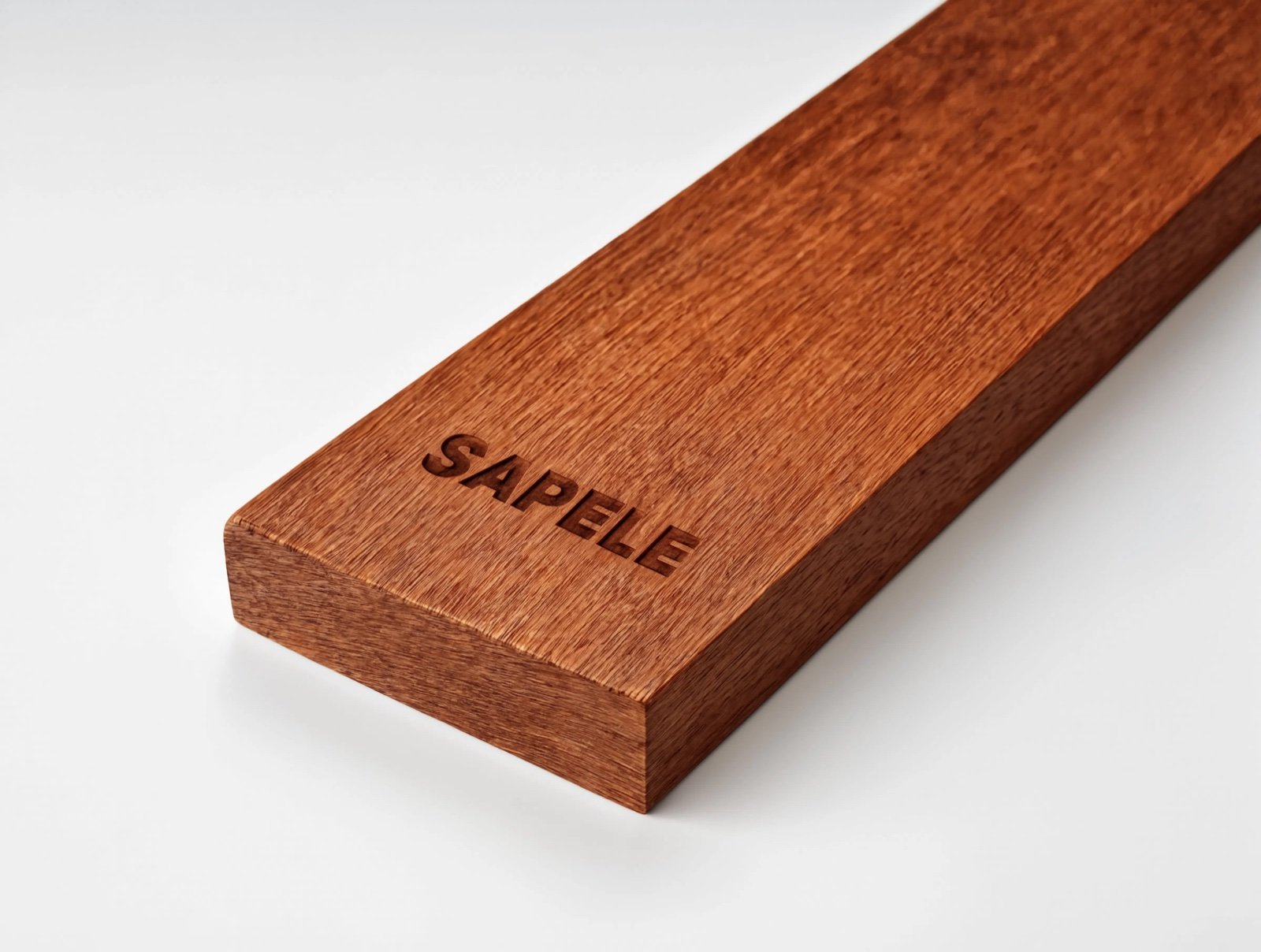
Sapele
Entandrophragma cylindricum
The most-specified African hardwood in European joinery, and its position is strengthening for a reason that has little to do with the timber itself.
True mahogany (Swietenia) and African mahogany (Khaya) are both CITES Appendix II — full export permits, every shipment. Afzelia, Pterocarpus and ipé are listed too. Sapele is not. It sits in EU Annex D, a monitoring tier: the EU importer files an import notification at customs, and that is all. That makes sapele the most capable mahogany-family timber a European buyer can currently specify without entering the CITES permit regime.
Sapele's interlocked grain produces a regular, tight ribbon figure on quartersawn faces, with strong chatoyance. That figure appears only on the quartersawn face — flat sawing cannot produce it.
Sapele is not a low-movement timber. Total tangential shrinkage is 7.2% and movement in service is rated medium. Quartersawn stock moves across its width at the radial rate rather than the tangential — roughly a 30% reduction in in-service width movement. If the application is dimensionally sensitive, specify quartersawn and expect to pay for the yield loss.
Sapele also reacts with ferrous metals in damp conditions, producing blue-black staining: specify stainless or brass fixings for exterior joinery.
UsesExterior joinery (windows and doors — its largest European use), interior joinery, staircases, mouldings, decorative veneer and plywood faces, flooring, decking and cladding, boat building and yacht interiors, furniture, musical instruments.
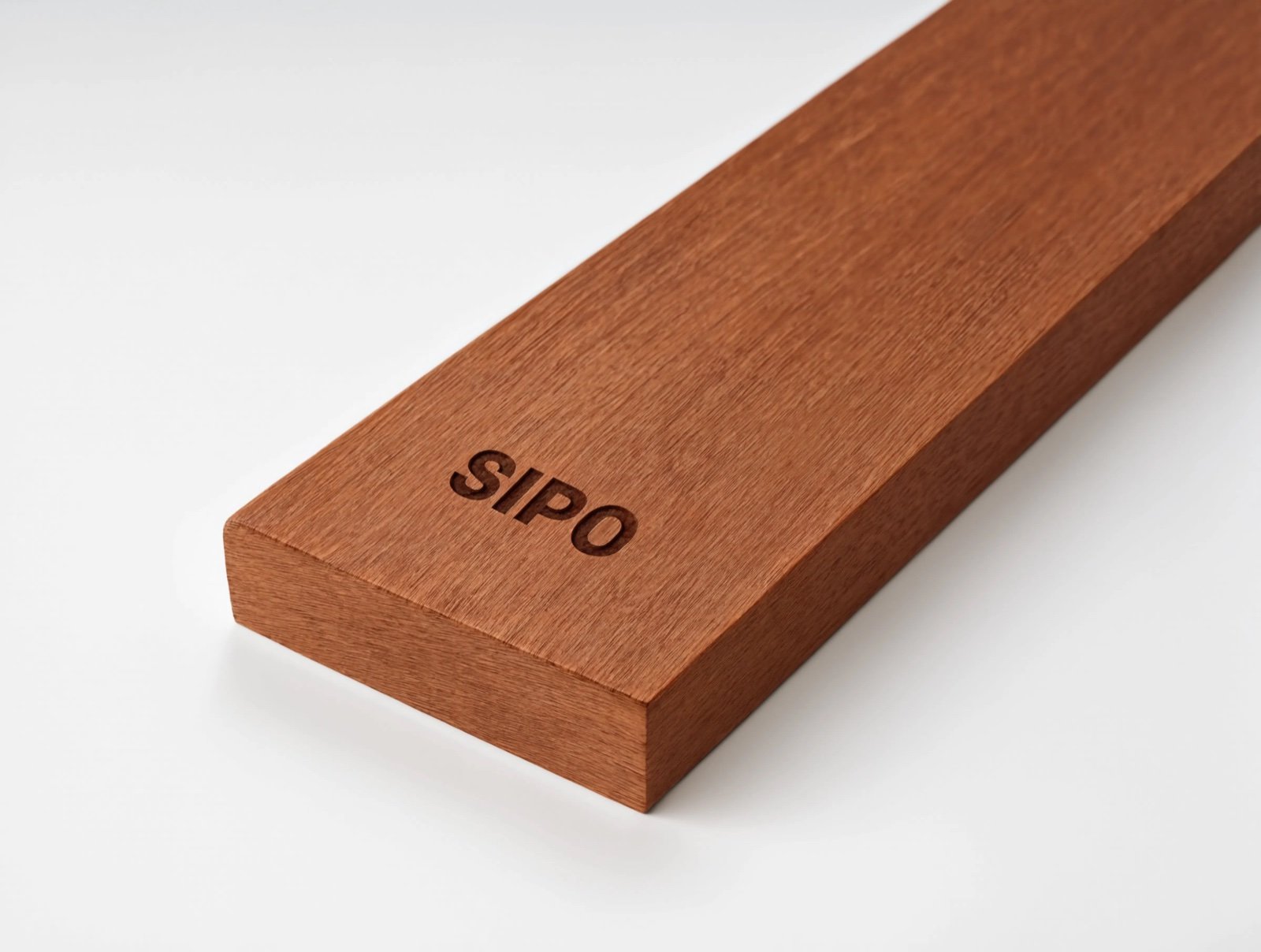
Sipo / Utile
Entandrophragma utile
Utile and Sipo are the same timber. UK contracts say Utile; French, Italian, Portuguese and Belgian contracts say Sipo. This causes recurring confusion in cross-border tenders, so we quote both on every document.
For exterior joinery sipo is arguably the better of the two Entandrophragmas: EN 350 class 2–3 durability against sapele's class 3, lower total shrinkage in both directions, and rated moderately stable to stable where sapele is only moderately stable. It is also the better conservation position — IUCN Least Concern, against Near Threatened for sapele.
What it gives up is figure. Sipo's ribbon stripe is broader and less pronounced, and it does not produce the pommelé or quilted grades that make sapele valuable in veneer. Its texture is coarser and more open-pored, so it needs grain filling before polishing.
UsesExterior joinery — windows, doors, façades, its strongest European application; interior joinery and cabinetry; furniture; veneer and plywood facing; flooring, parquet and stairs; mouldings; boat building; decking.
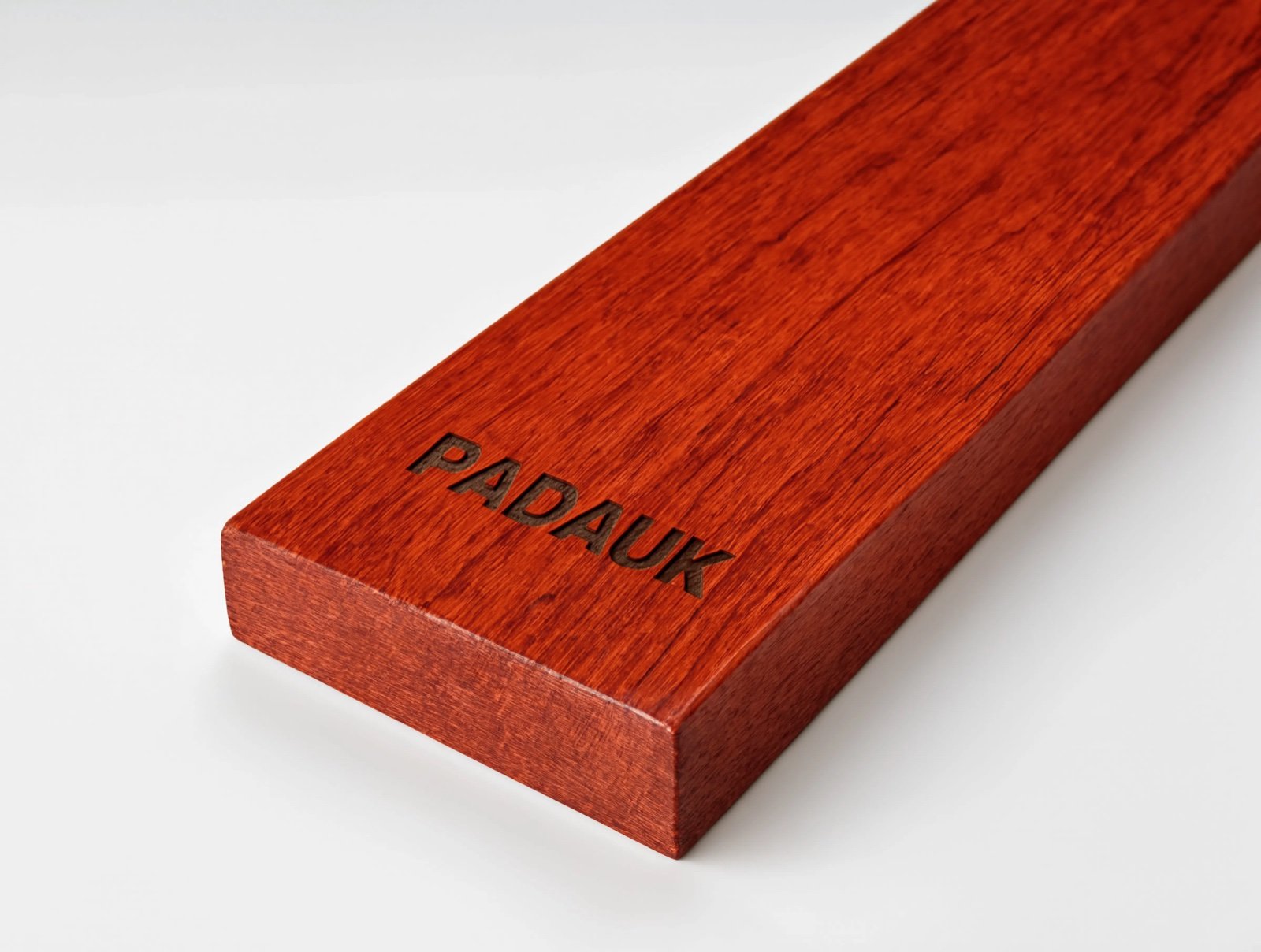
African Padauk
Pterocarpus soyauxii
Specify the species, not the name. "Padauk" without a botanical qualifier covers at least four commercially distinct woods with different densities, colours and regulatory positions. We supply Pterocarpus soyauxii and name it on every document.
Padauk is rated class 1 against fungal decay, termites and marine borers, and carries Use Class 5 — permanent immersion in marine and brackish water. Very few commercially available hardwoods do. Where iroko stops at Use Class 3, padauk keeps going. It is also, unusually for a class 1 durable timber, class 2 treatable.
It is the best-behaved species in our kilns: no checking, no distortion, no case-hardening, no collapse. The only cost is time — padauk is a slow drier.
Fresh padauk is vivid reddish-orange to blood red. It does not remain that colour. It darkens substantially to reddish or purplish brown, and turns grey-brown in light. Unsealed, the shift begins within days; UV-inhibiting finishes delay it, nothing prevents it.
Nobody should specify padauk for its orange in a permanent installation. Specify it for the aged brown, or accept the change. We would rather say this before you order than after.
UsesMarine construction, hydraulic works, bridges, shipbuilding, railway sleepers, heavy carpentry, high-traffic flooring, exterior and interior joinery, cabinetwork, musical instruments, turned objects, veneer.
02Process
How we dry and cut it
Anyone can sell a board. The difference between timber that performs and timber that fails shows up weeks later, in someone else's workshop.
We dry to a target, not to a habit
12% is a trade default, not a technical answer. Under EN 942, European exterior joinery wants 12–19%, interior joinery in moderately heated buildings 9–13%, interior joinery in continuously heated buildings 6–10%, and flooring 8–11%. Timber at 12% going into a heated European interior will shrink and open its joints.
So we don't quote one number. Tell us the destination and the application; we dry to it and certify the lot to EN 14298, the European standard for drying quality. EN 14298 assesses a lot rather than a piece — which is what matters when you are unloading a container. Against a 12% target it permits a lot average between 10.5% and 13.5% and requires 93.5% of pieces to fall between 8.4% and 15.6%.
We condition and prong-test every charge
Case-hardening is locked-in drying stress. It is invisible when you buy the timber and appears when you machine it — planer splits, end checks on crosscutting, cupping on resawing. It is prevented by conditioning at the end of the kiln schedule, and verified by the prong test. It is the step most often skipped, because it costs kiln time and adds nothing you can see. We record the result against every charge number.
We quartersaw interlocked grain deliberately
Sapele, sipo and iroko all have interlocked grain — the source of both the ribbon figure buyers pay for and the twist that ruins a batch. Quartersawing addresses both: radial-rate movement instead of tangential, and the figure that only appears on that face. Sapele logs carry internal growth stresses and need log-turning during sawing; iroko's calcium carbonate deposits need stellite-tipped saw teeth and tungsten carbide cutters.
03Output
What we make
| Specification | Standard |
|---|---|
| Moisture content | Customer-nominated, 7–20%, certified to EN 14298 |
| Standard thickness | 19–21 mm; other thicknesses to order |
| Lengths 2 m and above | 90% of production |
| Standard profiles | Smooth board · Wide grooves · Reeded decking · Wide cladding board · Tongue & groove · Cut to specification |
| To order | Any profile, thickness or width · Glued panels made up to a specified design |
04Clients
Who we work with
We supply importers, timber merchants, architects, project managers, joineries and boatyards. Our timber has gone into engineered flooring, staircases and stair treads, boat decking and cabin interiors, wall and façade cladding, pool decks, terraces, wide-plank flooring, interior joinery, and furniture and fittings — across Europe, Asia and Africa.
05FAQ
Frequently asked questions
What does Xeres Corp do?
Xeres Corp mills and exports African hardwood from Angola. The company operates one of Angola's largest hardwood mills, covering milling, grading, kiln drying and export packing, and supplies sawn and profiled hardwood to importers, joineries, boatyards and architectural projects in Europe, Asia and Africa.
Where is Xeres Corp located?
Xeres Corp is headquartered in Luanda, Angola, and operates one of Angola's largest hardwood mills.
Which hardwood species does Xeres Corp supply?
Eight African hardwoods: iroko (Milicia excelsa), African padauk (Pterocarpus soyauxii), sapele (Entandrophragma cylindricum), sipo or utile (Entandrophragma utile), ngulumazi, muanza, kibaba and kitiba. All are available sawn to specification.
Does Xeres Corp own its own sawmill?
Yes. Xeres Corp owns and operates its own mill in Angola.
What moisture content should African hardwood be kiln dried to?
It depends on the destination. Under EN 942, European exterior joinery needs 12–19%, interior joinery in moderately heated buildings 9–13%, interior joinery in continuously heated buildings 6–10%, and flooring 8–11%. Timber left at the 12% trade default will shrink and open its joints in a heated European interior. Xeres Corp kiln dries to a customer-nominated target between 7% and 20%, certified to EN 14298.
What profiles can Xeres Corp mill?
Most of what we make is machined to order. Six profiles are held as standards — smooth board, wide grooves, reeded decking, wide cladding board, tongue and groove, and cut to specification — and any other profile, thickness or width is produced to order. We also make up glued panels to a specified design.
Iroko vs teak — which is better for exterior use?
Iroko is the standard teak substitute and on several measures not a compromise. It is harder than teak (1,190–1,260 lbf against 1,070) and has a better tangential-to-radial shrinkage ratio (1.5 against 2.0), so it cups less. It carries EN 350 durability class 1–2, which places it in Use Class 3 — exterior, above ground — untreated. It is also not CITES listed, where teak from some sources carries both permit and conflict-timber questions. It is used as a teak substitute in production sailing yachts.
Sapele or iroko for exterior joinery?
Iroko, in most cases. Iroko carries EN 350 durability class 1–2 and moves very little once dried, with a tangential-to-radial shrinkage ratio of 1.5. Sapele is class 3 and is not a low-movement timber — total tangential shrinkage is 7.2% and movement in service is rated medium, so for exterior work it has to be quartersawn and dried to target. Sapele's advantage is appearance: a far stronger ribbon figure on the quartersawn face. Specify iroko for stability, sapele for figure.
What is the difference between sapele and sipo?
They are both Entandrophragma species from the mahogany family. Sipo is more durable (EN 350 class 2–3 against sapele's class 3), more dimensionally stable, and IUCN Least Concern against sapele's Near Threatened. Sapele is denser, harder, finer textured and has a far stronger ribbon figure, which is why it dominates decorative veneer.
Do I need a CITES permit to import African padauk?
Yes. African populations of Pterocarpus have been listed in CITES Appendix II since 23 February 2023, covering sawn wood as well as logs.
Do I need anything special to import sapele into the EU?
Since 29 June 2026 the genus Entandrophragma is listed in EU Annex D. The EU importer files an import notification at customs for each consignment. No CITES permit is required.
Does Xeres Corp export to Europe?
Yes. Xeres Corp exports to buyers across Europe, Asia and Africa from Angola.
When does EUDR apply to timber imports into the EU?
From 30 December 2026 for large and medium operators, and from 30 June 2027 for micro and small enterprises. From those dates a due diligence statement must be filed through the EU TRACES system for each consignment, and without a valid DDS reference number the goods cannot legally be placed on the EU market.
06Contact
Talk to us
We work with importers, architects and project managers across Europe, Asia and beyond. Contact us for pricing, samples or volume enquiries.